Master English from Basics to Advanced
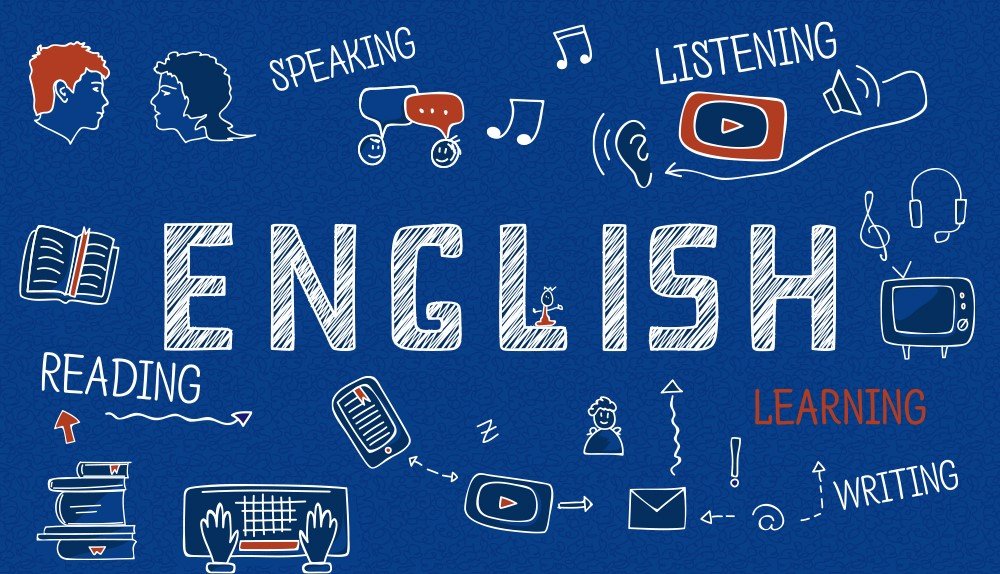
Build confident reading, writing, speaking, and thinking skills across all ages
Speaking & Listening
Achieve fluent, confident, and contextual communication.
Content:
Pronunciation, intonation, stress, fluency exercises
Conversational practice, role-plays, discussions
Listening to dialogues, podcasts, news, academic talks
Advanced: debate, presentation, public speaking, professional communication
Outcomes:
Speak fluently and accurately
Understand different accents and contexts
Participate confidently in discussions and presentations
Build correct, expressive, and complex sentence structures.
Content:
Beginner: tenses, articles, plurals, basic sentence patterns
Intermediate: modals, conditionals, reported speech, relative clauses
Advanced: inversion, complex sentence structures, cohesion, discourse markers
Professional/Exam prep: formal registers, academic writing conventions
Outcomes:
Speak and write grammatically correct sentences
Construct paragraphs and essays
Apply grammar in communication and exams
Build a broad, precise, and functional vocabulary.
Content:
Everyday and academic vocabulary
Synonyms, antonyms, collocations, idioms, and phrasal verbs
Contextual usage and word nuance
Business English vocabulary for professionals
Outcomes:
Express ideas clearly and confidently
Understand advanced texts
Apply vocabulary across speaking, writing, and comprehension

Read with understanding, analyze texts, and draw inferences.
Content:
Short passages, dialogues, and stories (kids)
Articles, opinion pieces, reports (teens)
Academic, news, and literature texts (adults)
Question types: main idea, inference, vocabulary in context, summarizing
Outcomes:
Extract explicit and implicit meaning
Identify tone, perspective, and argument structure
Summarize and synthesize information

Develop structured, fluent, and creative writing skills.
Content:
Paragraph writing, storytelling, journals (beginners & kids)
Essays, reports, letters, emails (teens & adults)
Argumentative and persuasive writing
Creative writing, advanced composition, exam writing techniques
Outcomes:
Communicate ideas clearly
Organize thoughts logically
Write for academic and professional purposes
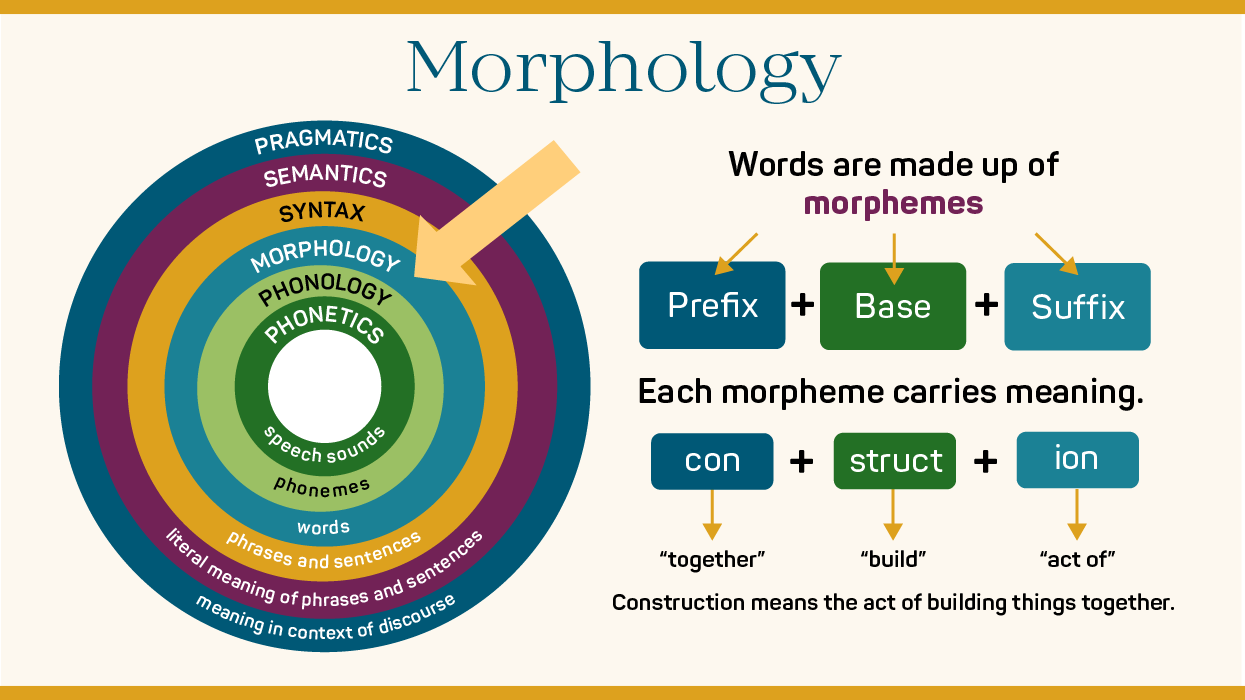
Language Foundations & Linguistic Intelligence
Purpose
Build a deep, scientific foundation in English by teaching how sounds, words, sentences, and meaning work together—from early reading to advanced comprehension.
What We Teach
1. Phonology & Phonemic Awareness
(How sounds work in language)
Letter–sound relationships
Phonemes, blends, digraphs, and syllable patterns
Stress, rhythm, and pronunciation accuracy
Listening discrimination and sound recognition
2. Phonics & Reading Development
(How sounds connect to written language)
Decoding words using phonics rules
Word segmentation and blending
Sight words and reading fluency
Story-based reading and dialogue comprehension
3. Morphology & Word Formation
(How words are built)
Roots, prefixes, suffixes, and word families
Derivations and compound words
Morphological patterns in academic vocabulary
Word formation as a tool for vocabulary expansion
4. Syntax & Sentence Structure
(How words form sentences)
Basic sentence patterns and word order
Sentence expansion and transformation
Complex and compound sentence structures
Grammar as structure, not memorization
5. Semantics & Meaning
(How meaning is created and interpreted)
Word meaning and context
Synonyms, antonyms, nuance, and connotation
Meaning shifts across sentences and texts
Vocabulary depth through semantic networks
6. Pragmatics & Language Use
(How language works in real life)
Using language appropriately in context
Formal vs informal communication
Purpose, tone, and audience awareness
Spoken and written communication strategies
Learning Outcomes
Decode unfamiliar words confidently
Read fluently with comprehension
Understand how meaning is structured in language
Expand vocabulary systematically and logically
Communicate accurately and appropriately across contexts
Who This Is For
Kids: Strong phonics, reading, and sound awareness
Teens: Word formation, sentence structure, meaning analysis
Adults: Advanced comprehension, vocabulary depth, language clarity